
CADGURU Design • Engineering • Technology
3D PRINTING MATERIALS

3D Printing Filaments For FDM & FFF 3D Printers

Choose the right 3D printing filament for prototypes, functional parts, engineering applications, educational models and creative projects. Explore common FDM and FFF filament materials including PLA, ABS, PETG, TPU, Nylon, Polycarbonate and specialty filaments.

10+ Filament Types
FDM 3D Printing
FFF Technology
3D
CADGURU FILAMENT
PLA Easy Printing
PETG Strong & Tough
TPU Flexible
UNDERSTANDING FILAMENTS

What Are 3D Printing Filaments?

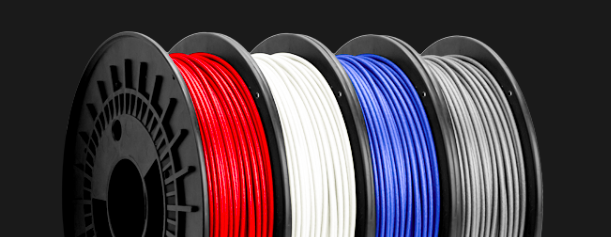
3D printing filament is the material used by many FDM (Fused Deposition Modeling) and FFF (Fused Filament Fabrication) 3D printers to create physical objects from digital designs.

During the printing process, filament is fed into the printer's extruder, heated until it reaches the required printing temperature and deposited through a nozzle layer by layer. Thousands of these layers can combine to create prototypes, mechanical components, models, tools and customized products.

Different materials offer different characteristics. Some filaments are designed for easy printing and attractive surface finishes, while others focus on strength, flexibility, heat resistance, chemical resistance or engineering performance.

Selecting the correct filament is therefore an important part of achieving a successful 3D print. Printer temperature range, heated bed capability, nozzle type, enclosure requirements, moisture sensitivity and the final application's requirements should all be considered.

01

Material Matters

The right filament can significantly influence print quality, durability, flexibility, appearance and overall performance.

✓ Printability ✓ Strength ✓ Heat Resistance ✓ Flexibility
MATERIAL LIBRARY

Common Types of 3D Printing Filaments

Explore the properties, recommended temperatures, applications, advantages and limitations of commonly used FDM and FFF 3D printing filaments.

01
PLA
EASY TO PRINT

PLA – Polylactic Acid

PLA is one of the most commonly used 3D printing materials. It is popular among beginners, students, designers and professionals because it generally prints easily and provides a good surface finish with relatively low warping.

Printing Temperature 180–220°C
Bed Temperature 0–60°C

Properties

Biodegradable, easy to print and generally low-warping.

Common Uses

Prototypes, toys, models, educational projects and decorative prints.

Advantages

Easy to use, attractive surface finish and comparatively simple printing.

Limitations

Can be brittle, has relatively low heat resistance and may not be suitable for demanding outdoor applications.
02
ABS
DURABLE

ABS – Acrylonitrile Butadiene Styrene

ABS is a strong and impact-resistant thermoplastic frequently used for functional prototypes, enclosures, automotive-related components and applications where higher heat resistance is required compared with PLA.

Printing Temperature 220–250°C
Bed Temperature 80–110°C

Properties

Strong, durable and more heat-resistant than PLA.

Common Uses

Automotive components, enclosures, functional prototypes and engineering parts.

Advantages

Durable, impact-resistant and suitable for post-processing and machining.

Limitations

Can warp during printing and generally benefits from a heated bed and enclosure. Ventilation is important.

03
PETG
VERSATILE

PETG – Polyethylene Terephthalate Glycol

PETG is widely used for functional 3D printing because it combines good strength and toughness with comparatively straightforward printing. It is useful when a project needs more durability than typical PLA prints.

Printing Temperature 220–250°C
Bed Temperature 60–80°C

Properties

Strong, tough, relatively flexible and chemically resistant.

Common Uses

Functional parts, mechanical components, containers and practical prototypes.

Advantages

Good toughness, chemical resistance and generally lower warping than ABS.

Limitations

Stringing can occur and careful printer calibration may be required.

04
TPU
FLEXIBLE

TPU / TPE – Flexible Filaments

TPU and other thermoplastic elastomer filaments are flexible, rubber-like materials designed for prints that need bending, impact absorption or elasticity.

Printing Temperature 210–240°C
Bed Temperature 40–60°C

Properties

Flexible, elastic and rubber-like with good abrasion resistance.

Common Uses

Phone cases, seals, gaskets, protective components and wearable items.

Advantages

Flexible, durable and suitable for applications requiring movement or cushioning.

Limitations

Usually requires slower printing speeds and careful extrusion settings.

05
NY
ENGINEERING

Nylon – Polyamide

Nylon is a strong and durable engineering material known for toughness, flexibility and wear resistance. It is often selected for mechanical components where durability is important.

Printing Temperature 240–270°C
Bed Temperature 70–100°C

Properties

Strong, flexible, tough and wear-resistant.

Common Uses

Gears, hinges, mechanical components, brackets and functional parts.

Advantages

Excellent toughness, impact resistance and useful wear characteristics.

Limitations

Nylon absorbs moisture quickly and normally requires appropriate drying and higher printing temperatures.

06
PC
HIGH TEMP

PC – Polycarbonate

Polycarbonate is an engineering thermoplastic known for high strength and temperature resistance. It is generally used when ordinary consumer-grade filaments cannot provide the required mechanical performance.

Printing Temperature 260–310°C
Bed Temperature 100–120°C

Properties

High strength, toughness and temperature resistance.

Common Uses

Engineering components, tools, fixtures and durable enclosures.

Advantages

Very strong and capable of handling comparatively high temperatures.

Limitations

Can warp and generally requires a capable high-temperature printer and controlled printing environment.

07
HIPS
SUPPORT

HIPS – High Impact Polystyrene

HIPS is often used as a support material, especially in multi-material printing with ABS. It can be dissolved using suitable solvents such as limonene, making it useful for complex geometries.

Printing Temperature 230–250°C
Bed Temperature 90–110°C

Properties

Lightweight and frequently used as a dissolvable support material.

Common Uses

Support structures for ABS prints and standalone models.

Advantages

Can be dissolved in limonene and provides useful support for complex designs.

Limitations

Requires suitable printing conditions and may produce fumes during printing.

08
PVA
WATER SOLUBLE

PVA – Polyvinyl Alcohol

PVA is a water-soluble filament commonly used as a support material in dual-extrusion 3D printing. It is particularly useful when a printed model contains complex overhangs or internal structures.

Printing Temperature 180–220°C
Bed Temperature 45–60°C

Properties

Water-soluble and suitable for support structures.

Common Uses

Complex supports for dual-extrusion PLA or compatible materials.

Advantages

Dissolves in water and can simplify removal of complex support structures.

Limitations

Highly moisture-sensitive and generally more expensive than standard filaments.

09
CF
REINFORCED

Carbon Fiber-Reinforced Filaments

Carbon fiber-reinforced filament combines a polymer base such as PLA, PETG or Nylon with carbon fibers. The reinforcement can improve stiffness and strength-to-weight performance for demanding applications.

Base Materials

PLA, PETG, Nylon and other compatible polymer bases.

Common Uses

High-strength parts, drones, RC components, fixtures and engineering prototypes.

Advantages

Lightweight, stiff and offers a strong strength-to-weight ratio.

Limitations

Carbon fiber is abrasive and generally requires a hardened nozzle to reduce nozzle wear.

10
FX
SPECIALTY

Wood, Metal & Glow-in-the-Dark Filaments

Specialty filaments are generally polymer-based materials containing additives that create unique appearances, textures or visual effects. They are popular for decorative, artistic and creative 3D printing projects.

Base Materials

Commonly PLA-based with wood, metal or phosphorescent additives.

Common Uses

Decorative prints, artistic models, display pieces and creative prototypes.

Advantages

Unique appearance, textures and visual effects.

Limitations

Some specialty formulations can clog or accelerate wear on standard brass nozzles.

FROM DIGITAL DESIGN TO PHYSICAL OBJECT

Turn Your 3D Ideas Into Real Products

3D printing allows designers, students, engineers, startups and businesses to move from a digital concept to a physical prototype without depending entirely on traditional manufacturing processes.

With the right combination of printer, material and printing parameters, filament-based 3D printing can be used for rapid prototyping, product development, educational models, customized components and small-batch production.

✓ Rapid prototyping ✓ Product development ✓ Engineering models ✓ Customized components ✓ Educational projects ✓ Creative & decorative models
3D printing filament and 3D printing material
CADGURU 3D printing filament
MATERIAL SELECTION GUIDE

How to Choose the Right 3D Printing Filament?

The best filament depends on the printer, design requirements and the environment in which the finished part will be used.

01

Check Printer Compatibility

Confirm the printer's maximum nozzle temperature, heated bed capability, extruder type and recommended filament diameter before selecting a material.

02

Consider Strength

Functional and mechanical components may require tougher materials such as PETG, Nylon, PC or reinforced filaments.

03

Think About Flexibility

TPU and TPE are suitable choices when the final object needs elasticity, bending or rubber-like behavior.

04

Consider Heat Exposure

If the printed component will be exposed to elevated temperatures, choose a material with suitable thermal performance rather than relying only on appearance.

05

Check Moisture Sensitivity

Materials such as Nylon and PVA can absorb moisture. Appropriate storage and drying practices can help maintain consistent print quality.

06

Match Material to Application

Decorative models, prototypes, mechanical parts and outdoor applications can have very different material requirements.

QUICK REFERENCE

3D Printing Filament Comparison

A quick overview of common filament characteristics to help you understand which material may suit a particular project.

Filament Strength Flexibility Heat Resistance Common Application
PLA Medium Low Low Models & Prototypes
ABS High Medium Medium–High Functional Parts
PETG High Medium Medium Practical Components
TPU Medium Very High Medium Flexible Parts
Nylon Very High High High Engineering Parts
Polycarbonate Very High Medium Very High High-Performance Parts
Carbon Fiber Very High Low–Medium Depends on Base Lightweight Engineering Parts
APPLICATIONS

Where Can 3D Printing Filaments Be Used?

Filament-based 3D printing is useful across education, design, engineering, manufacturing, product development and creative industries.

01

Rapid Prototyping

Quickly create physical versions of digital concepts before moving toward final manufacturing.

02

Engineering & Design

Produce functional models, fixtures, components and engineering prototypes.

03

Education

Create practical models and learning aids for students, educators and technical training programs.

04

Product Development

Test product dimensions, ergonomics and design concepts before mass production.

05

Custom Manufacturing

Produce customized components and low-volume parts without always requiring traditional tooling.

06

Creative Projects

Build decorative models, artistic objects, prototypes, displays and customized products.

FREQUENTLY ASKED QUESTIONS

3D Printing Filament FAQs

What is 3D printing filament? +

3D printing filament is a thermoplastic material used by FDM and FFF 3D printers. The filament is heated and deposited layer by layer to create a three-dimensional object from a digital model.

Which filament is easiest for beginners? +

PLA is commonly considered one of the easier materials for beginners because it generally prints at relatively moderate temperatures and tends to have lower warping compared with several engineering materials.

What is the difference between PLA and ABS? +

PLA is generally easier to print and is popular for models and prototypes, while ABS is typically selected when greater durability, impact resistance and higher temperature performance are required.

Which filament is suitable for flexible 3D prints? +

TPU and TPE are commonly used when flexibility and rubber-like properties are required. Examples include protective cases, seals, gaskets and flexible components.

Does 3D printing filament absorb moisture? +

Some filament materials are more moisture-sensitive than others. Nylon and PVA are particularly moisture-sensitive, so proper storage and drying can be important for consistent printing results.

What filament is used for strong engineering parts? +

Depending on the application and printer capabilities, engineering materials such as Nylon, Polycarbonate, reinforced filaments and suitable PETG or ABS formulations can be considered for stronger functional components.

Can all 3D printers use every type of filament? +

No. Filament compatibility depends on factors such as nozzle temperature, heated-bed capability, extruder design, build surface, nozzle material and whether an enclosure is required.

CADGURU 3D PRINTING

Have a 3D Printing Requirement?

Whether you are looking for suitable filament, 3D printing solutions, prototypes or technical guidance, connect with CADGURU to discuss your requirement.

3D PRINT DESIGN • CREATE • BUILD
HOW TO REACH US

Let's Talk About Your 3D Printing Requirement

Contact CADGURU for information about 3D printing, filaments, design requirements, training and related technical solutions.

ADDRESS B-8, 2nd Floor, Ram Dutt Enclave,
Uttam Nagar, New Delhi - 110059
WORKING HOURS Mon – Sat
9:00 A.M. – 8:00 P.M.